
Gaming Is Widespread and Usually Not a Problem
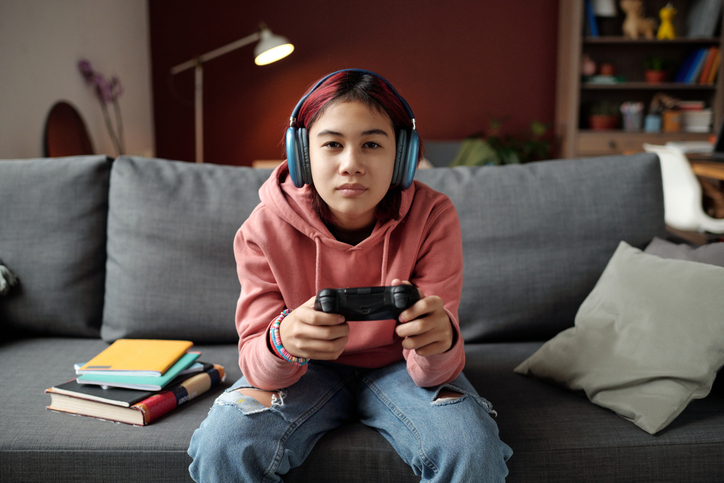
Gaming is a mainstream activity, and most children participate at some level. Moderate participation in gaming is not harmful and may even provide social connection and mental well-being benefits, according to James Sherer, M.D., and colleagues in a new book from APA Publishing. Significant problems with gaming, or gaming addiction, only affect players. (Sherer 2026)
An estimated 85% of U.S. teens play video games, and 40% identify as gamers, according to a 2024 Pew Research survey. Boys are more likely than girls to play every day (61% vs. 22%) and to identify as gamers (62% vs 17%). Among those who play video games, nearly three-fourths say one reason they play is to spend time with others, and nearly half say they have made a friend while playing. However, teens also report harassment and bullying over video games—80% say it’s a problem. (Pew 2024)
Gaming is not limited to teens and young adults. According to the Entertainment Software Association, nearly two-thirds of Americans ages five to 90 regularly play video games.
When Gaming Becomes a Problem: Internet Gaming Disorder
While most people enjoy video games without problems, gaming becomes a problem when it significantly interferes with a person’s daily living—their ability to function, their relationships, and their responsibilities over an extended period of time. It is not simply a person spending a lot of time gaming.
Internet gaming disorder* involves a loss of control over video game playing and a significant disruption to daily life. People with gaming disorder are preoccupied with gaming; experience withdrawal symptoms (such as sadness, anxiety, irritability) when gaming is taken away or not possible; continue to game despite problems; and are not able to stop or reduce gaming when attempting to do so.
An estimated 2-3% of people worldwide are affected by internet gaming disorder, and it is much more common among males than females (Stevens 2021). Research has found that people with internet gaming disorder have patterns of brain activity similar to those seen in people with substance use disorders (Sherer 2026).
How Internet Gaming Disorder Is Diagnosed and Treated

If you are concerned about your child’s gaming, seek evaluation from a qualified health care professional. Evaluation typically involves specific screening tools and structured interviews to assess gaming behavior and impact.
Understanding the motivations, such as experiencing cravings or gaming impulses (more common among males) or using gaming to cope with emotional challenges (more common among females), is important to finding the best treatment. Parents’ observations can be helpful in understanding the broader context of the gaming behavior. Treatment often involves cognitive behavior therapy to help the individual identify and change problematic gaming behavior and develop healthy coping strategies. Family therapy or family interventions are often helpful in improving personal skills and family relationships. Although there is no medication specifically for gaming disorder, medication may be used to help treat other conditions, such as ADHD or depression occurring at the same time.
Tips for Parents on Healthy Use of Gaming
- Understand the games your child plays. Check the Entertainment Software Ratings Board information to determine if they are developmentally appropriate.
- Collaborate on boundaries. Video games are important social spaces. Gaming platforms are becoming central hubs for children’s social lives. Approach conversations with children from a perspective of curiosity. Work together to set reasonable boundaries that can help teach them how to maintain balanced gaming habits. Adapt the limitations over time as technology and situations change and the child matures. Completely prohibiting gaming can limit children from developing healthy self-regulation skills.
- Encourage positive communities. Gaming communities provide valuable social connections and develop teamwork and problem-solving skills.
- Stay informed. Gaming platforms are increasingly incorporating AI and virtual reality, creating immersive, sensory experiences, enabling the ability to track and respond to children’s reactions and behaviors, and offering more sophisticated ways to maintain engagement and encourage spending. Learn about new platforms and technologies and their potential impacts.
“The goal is to foster healthy engagement with technology while preventing problematic usage patterns from developing,” Sherer and colleagues suggest.
Read more on Internet Gaming Disorder.
*Addiction to gaming is described in the APA Diagnostic and Statistical Manual of Mental Disorders (DSM-5-TR), which is used by mental health professionals to diagnose mental disorders. In the DSM-5-TR, the condition is referred to as Internet Gaming Disorder (IGD)(1). IGD is included in the section recommending conditions for further research, along with caffeine use disorder and other conditions.
References
- Sherer, J. editor. 2026. Internet Gaming Disorder. APA Publishing.
- Pew Research survey, 2024: Teens and Video Games Today | Pew Research Center
- Stevens MW, Dorstyn D, Delfabbro PH, King DL. Global prevalence of gaming disorder: A systematic review and meta-analysis. Aust N Z J Psychiatry. 2021 Jun;55(6):553-568. doi: 10.1177/0004867420962851. Epub 2020 Oct 7. Erratum in: Aust N Z J Psychiatry. 2023 Jun;57(6):928. doi: 10.1177/00048674221137011. PMID: 33028074.