
Can Engaging in Art Help Address Loneliness?
Loneliness is a major public health concern and an important contributor to poor mental health. According to a 2025 APA poll, one-third of adults (33%) report that they experienced feelings of loneliness at least once a week over the past year. That’s up slightly over polling from 2024 (30%). Loneliness is especially impacting young people. More than half of American college students are experiencing loneliness, according to a new study published in the Journal of American College Health.

Loneliness is associated with increased risk for a range of physical health issues, including diabetes, arthritis, and cardiovascular diseases. Loneliness is also a preventable risk factor for various mental health issues, including dementia, depression and substance use disorders.
Recent research adds to the evidence that engaging in group creative arts activities is an easily accessible, inexpensive way to help address loneliness. A 2024 study from the National Endowment for the Arts, “Arts Attendance, Art-Making, and Social Connectedness: Spring/Summer 2024,” found that
- 16% of adults created, practiced, or performed artworks in the previous month.
- Arts creators were more likely than non-creators
- to receive social and emotional support
- to get together with friends or family.
Brain imaging research has found that areas of the brain associated with social connection are impacted by engaging in art. Interventions that nurture social brain networks through art engagement may help reduce the risk of dementia and promote psychological well-being and cognitive functioning in healthy aging [1]. Reward systems involving brain chemicals like dopamine and serotonin are also activated when people are both creating and observing the arts.[2].
Susan Magsamen, executive director of the International Arts + Mind Lab, Center for Applied Neuroaesthetics at John Hopkins University, describes the power of art engagement this way: “ The power of the arts has always been with us, but deeper understanding of its impact on the brain is relatively new. Research now makes clear that experiencing or creating art sparks a dynamic interplay among brain cells that spearheads billions of changes affecting our thoughts, emotions, and actions.” [2]
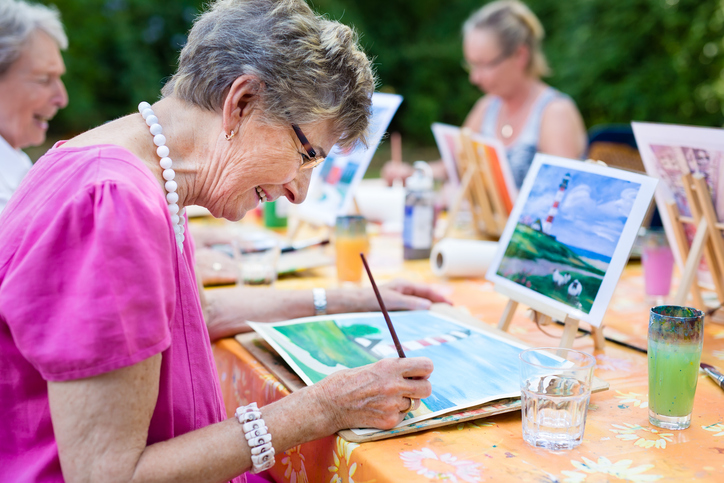
Creating or engaging in the arts also creates opportunities for social interaction and building community. Even in our increasingly digital world, where creation often takes place in solitude, there are opportunities for online connection and community.
The Foundation for Art and Healing, a nonprofit that promotes the arts as an intervention for loneliness, has a range of offerings, including original films, online exercises, and in-person workshops. The Foundation, led by Jeremy Nobel, M.D., Ph.D., a physician and lecturer at Harvard Medical School, has recently focused efforts on college campuses. It is active on more than 50 campuses and has reached more than 6,000 students with its arts programming. One program, Campus Colors and Connection, works with groups of students to facilitate exploration of their cultural identity. Through participating in art activities, they are encouraged to consider and to share their experiences and stories.
References
- van Leeuwen JEP, Boomgaard J, Bzdok D, et al. (2022) More Than Meets the Eye: Art Engages the Social Brain. Front. Neurosci. 16:738865. doi: 10.3389/fnins.2022.738865
- Magsamen S. Your Brain on Art: The Case for Neuroaesthetics. Cerebrum. 2019 Jul 1;2019:cer-07-19. PMID: 32206171; PMCID: PMC7075503.
- Ames, M. 2026. Colors and Connections Can engaging in art help heal loneliness? Learning Well Magazine, Jan. 6, 2026. https://learningwellmag.org/article/colors-and-connections