
Supporting the Mental Health of Family Caregivers
About one in four U.S. adults, an estimated 63 million people, are family caregivers, an increase of nearly 50% from a decade ago, according to a recent report, Caregiving in the US 2025 from AARP and the National Alliance for Caregiving.
Family caregivers provide essential support to loved ones with chronic, disabling, or serious health conditions. The report describes a “diverse population of caregivers, many of whom are strained, under-supported and often invisible in national conversations about health care, aging, and economic policy.
While many find caregiving a rewarding and valuable experience that brings a sense of purpose, it is also typically fraught with many challenges. Caregivers may face financial strain from medical expenses, the need to cut back or stop working to provide care, and difficulty finding services such as home health aides and transportation. Caregiving often takes a significant physical, mental and emotional toll.
Caring for the Caregivers
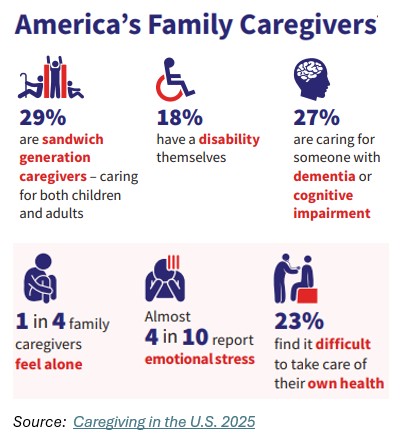
Caregivers may prioritize their loved one’s care or may lack the support and resources to allow time for themselves. Two in three caregivers experience high emotional stress, nearly half report physical strain, and about one in four feel isolated and alone, according to the report. Nearly a quarter of caregivers say they have difficulty caring for themselves. But caring for yourself is important; it is not selfish, it’s essential to maintaining your health and well-being and your ability to be there for your loved ones. More than half of caregivers said they didn’t have a choice about becoming a caregiver. Those who feel they lack the choice experience significantly greater mental health concerns, according to the report.
Caring for a person with a mental health condition differs from caring for a person with a physical condition in several ways. For instance, because mental health conditions may be less obvious or less understood than physical conditions, extended family and friends may be less likely to offer assistance or empathy. Mental health conditions can be unpredictable, making planning and caregiving more difficult. Navigating the behavioral health care system and barriers it presents, such as a shortage of providers, long wait times, and inadequate insurance, can be very challenging.
Fact sheet from APA Foundation: Caring for Yourself While Caring for Others (.pdf)
Caregiver Experiences Vary from State to State
A second report from AARP and the National Alliance for Caregiving (.pdf), released in October, examines differences in the caregiving landscape across states. The report notes that state policies on paid leave, respite care and other factors have a significant impact on the experiences of family caregivers. For example, in Iowa, about 10% of family caregivers receive pay, primarily through the Medicaid home and community-based services self-direction waivers, compared to 28% in New Jersey. In Georgia, 59% of caregivers report experiencing financial strain compared to 35% in Minnesota.
Double Duty: Working and Caregiving
About 70% of working-age family caregivers are engaged in paid employment. About half of all working caregivers report that their work responsibilities have been affected by caregiving. For example, they report arriving late or leaving early, having to take time off, or depleting savings. Despite the challenges, about half have not disclosed their caregiver role to their employer, according to the AARP report.
A new resource from the APA Foundation's Center for Workplace Mental Health resource offers insights on best practices for employers to provide meaningful support to their employee caregivers. Recommendations for employers include demonstrating a commitment to employee well-being, offering flexible work arrangements and remote or hybrid options, offering time off options and the ability to share or donate leave, and ensuring employees learn about paid family leave (such as the Family and Medical Leave Act (FMLA) and others). Learn more: Best Practices for Caregivers in the Workplace
Resources for Caregivers
- Fact sheet from APA Foundation: Caring for Yourself While Caring for Others (.pdf)
- The Caregiver Action Network, in partnership with 80 nonprofits, has developed a hub for resources for caregivers. It includes access to a series of webinars, topic-specific resources, and a Frequently Asked Questions resource. Learn more here
- Search for care help in your community through the Eldercare Locator. A service of the U.S. Administration on Aging, it provides connections to state and local Area Offices on Aging and many other local resources.
- Learn about opportunities to get paid as a caregiver for a family member
- Find help in each state through AARP’s state-by-state Family Caregiver Resource Guides