
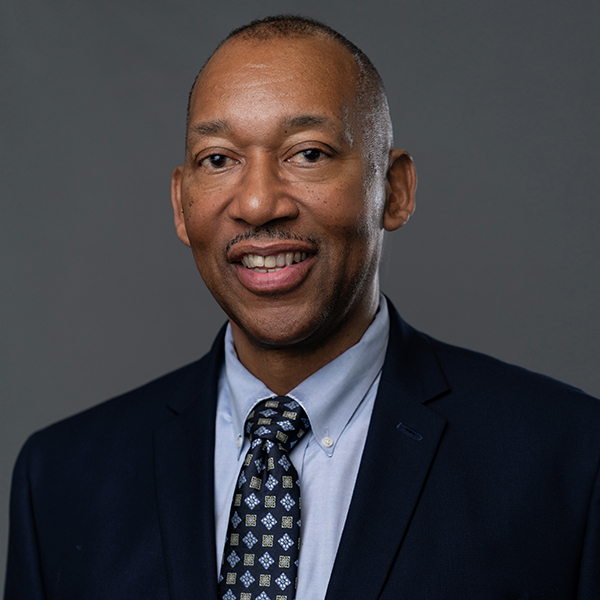
Candidate for 2026 President-Elect
Biography
Dr. Rahn Kennedy Bailey is a board-certified psychiatrist whose career spans clinical care, forensic practice, academic leadership, and national advocacy. For more than three decades, he has worked to ensure that psychiatry is seen not only as a medical discipline but as a field that shapes public life. His path has taken him from inpatient wards where the most ill patients were treated, to courtrooms where questions of responsibility were argued, to classrooms where the next generation of physicians were trained, and to national associations debating psychiatry’s future. At every stage, he has engaged with issues of equity, violence, and accountability, which remain central to his professional identity.
In his role as Assistant Dean of Community Engagement & Health Equity, Dr. Bailey builds connections between psychiatry and the communities that depend on it. In 2024, he became Academic Medical and Psychiatric Director of the New Orleans Correctional Justice Center’s Mental Health Services Unit, where he directs efforts to provide care in a setting that tests both clinical skill and institutional resolve.
Earlier in his career, Dr. Bailey practiced and taught in Houston. He led a schizophrenia inpatient service, supervised clinical trials in psychopharmacology, and developed a forensic practice that included both criminal and civil evaluations. Competency assessments, capital cases, and testimony on sexual offender laws were regular parts of his work. These experiences confirmed that psychiatry is not only a therapeutic profession but also a voice in law and policy.
In later years, his focus shifted toward leadership in academic medicine. He has chaired three departments of psychiatry during critical periods of growth and renewal. At Meharry Medical College, he strengthened psychiatric education within a historically Black medical school, where representation and training carried both scientific and cultural significance. At Wake Forest University, he created an Addiction Psychiatry Fellowship in 2017 at the height of the opioid epidemic, meeting an urgent need for specialists. At Louisiana State University, where he has served as chair since 2021, he has rebuilt programs, expanded faculty, and guided the department to Aesculapian Awards for teaching in 2024. Each appointment carried distinct challenges, but the aim was constant: to leave behind stronger programs than the ones he inherited.
Alongside his leadership responsibilities, Dr. Bailey has sustained a commitment to scholarship. He has authored 68 peer-reviewed academic articles in over 20 journals, addressing psychotic illness, mood disorders, forensic psychiatry, confidentiality, risk management, and the psychiatric consequences of incarceration. He has also written on conditions affecting vulnerable groups, including ADHD in minority youth and postpartum depression. His books—Health Disparities (2013), Gun Violence: A Psychiatrist’s Perspective (2018), and Intimate Partner Violence: A Forensic Review (2020)—extend psychiatry into debates about inequity and violence. They reflect a career-long view that these problems are not peripheral to psychiatry but central to its mission.
Awards and Honors
- Chester Pierce Resident Research Award, APA (1995)
- Outstanding Faculty Member, University of Texas Houston (2000)
- NMA Physician of the Year during Hurricane Katrina crisis (2006)
- Isaac Slaughter Memorial Leadership Award, Black Psychiatrists of America (2010)
- Distinguished Fellow, APA (2019)
- Ernest Y. Williams Clinical Scholars of Distinction Award, NMA (2022)
- Solomon Carter Fuller Award, APA (2024)
- APA Presidential Commendation (2025)
- Past Chairman of Psychiatry at LSUHSC-SOM
- Past Chairman of Psychiatry at Wake Forest SOM
- Past Chairman of Psychiatry at Meharry Medical College