
Mental Health Equity Champion Spotlight — Dr. Helen Blaisdell-Brennan
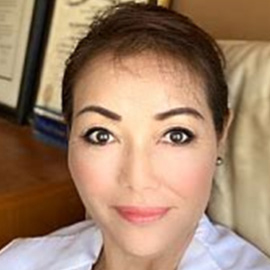
Dr. Blaisdell-Brennan is a psychiatrist educated and trained at Harvard University, the John A. Burns School of Medicine, and the Neuropsychiatric Institute Residency Program at the University of California, Los Angeles. Combining medicine, science, and a love for Hawaii, Dr. Blaisdell-Brennan is dedicated to assisting individuals with mental health concerns. Her specialization lies in adult psychiatry; she has been trained in medication management as well as CBT and interpersonal therapy at the University of California at Los Angeles. Dr. Blaisdell-Brennan is the Past President of the Hawaii Psychiatric Medical Association. She represents Hawaii in the American Psychiatric Association Assembly. With nearly 20 years of experience in practice, she continues to positively impact her patients’ mental well-being through her commitment to providing compassionate and effective care.
Dr. Blaisdell-Brennan thank you so much for joining us today. What inspired you to pursue a career in psychiatry, and how has your personal journey shaped your commitment to advancing mental health equity?
Thanks for having me. I'm drawn by the idea that psychiatry treats not only the mind and body, but also the soul. When psychotherapy and medication are used appropriately and judiciously, psychiatry offers a wonderful opportunity to see people regain – or attain for the first time a fulfilling life.
When you think about mental health equity, what does it mean in the unique cultural, historical, and geographic context of Hawai'i and the Pacific Islands?
Mental health equity means that every person has a fair opportunity to achieve the highest possible level of mental well-being, regardless of socioeconomic status, geographic location, or cultural identity. Hawaii faces unique challenges in reaching this goal. At the time of Western contact in 1778, the Native Hawaiian population was thriving at an estimated 300 to 750 thousand people. In the epidemics that followed Captain Cook's arrival, infectious diseases, led to an estimated 90 percent population loss. The trauma of Western contact has left emotional scars – epigenetic effects. Secondly, there is a shortage of physicians, including psychiatrists, in rural areas, such as the islands of Kauai, Maui, Moloka‘i, Lana‘i and Hawai‘i. The Hawaii Psychiatric Association is actively working with all stakeholders to achieve safe, physician-led care on islands.
You work with individuals and families across diverse communities. What mental health trends or challenges do you see most often among Native Hawaiian, Pacific Islander, and other underserved groups?
We know from a growing body of research that Native Hawaiians and Pacific Islanders face higher burdens of anxiety, depression, and other mental health challenges than many comparison groups. Among our youth, the statistics are especially heartbreaking: in Hawai‘i, one study found that 12.9 % of Native Hawaiian adolescents reported having attempted suicide at some point in their lives—compared to 9.6 % among other adolescents. Native Hawaiian youth and emerging adults (ages 15–24) are cited as being 2.3 times more likely to die by suicide than their peers in Hawai‘i.²That ratio underscores a stark inequity: the risk of death by suicide is amplified in indigenous communities facing systemic stress, cultural displacement, and intergenerational trauma. Even more striking, in the youngest adolescent groups—those aged 10 to 14—Native Hawaiians are overrepresented among completed suicides. That means our youngest are disproportionately bearing the gravest cost of despair. These numbers are not abstract. They are calls to action. We must uplift prevention, strengthen connection to cultural identity and ‘ohana, expand access to mental health services, and center Indigenous resilience in healing strategies.
How can clinicians integrate cultural humility and respect for traditional Hawaiian and Pacific Islander healing practices into psychiatric care to build trust and improve outcomes?
That's a fantastic question. Cultural humility matters—no matter who we serve or where we stand. It’s essential whether we’re working with Native Hawaiians, Native Americans, African Americans, Asian Americans, or any of the many communities that make up our islands and our nation. Cultural humility means recognizing that we don’t hold all the answers; our patients do. They bring the wisdom of their ‘ohana, their community, and their lived experience into the healing process.
Although my focus has been Native Hawaiian mental health, the principle applies universally. One study among Native Hawaiian adolescents found that those who felt less connected to their culture were at higher risk for suicidal thoughts and behaviors. That reminds us how powerful cultural identity can be as a protective factor. Reconnection—to ancestry, language, and values—can literally save lives.
In clinical work, cultural humility involves curiosity, respect, and the courage to see healing through our patients’ eyes. A Hawaiian elder once reminded me: healing begins when we listen – and listen deeply —to our patients. Healing is not just about treatment. It’s about connection.
Hawai‘i’s geography often makes access to care challenging, especially on neighbor islands. How are innovations like telehealth and mobile services helping to bridge those gaps, and what limitations remain?
Absolutely. Telehealth has been transformative for us here in Hawai‘i. When Congress relaxed telehealth regulations during the COVID-19 pandemic, it opened a door that had long been closed for people on our neighbor islands. Suddenly, a patient on Kauai or Maui could see a psychiatrist in Honolulu without paying hundreds of dollars for a flight.
What we saw was remarkable—our no-show rates dropped dramatically. And that makes sense. When someone is struggling with depression or anxiety, just getting out of bed, getting dressed, and making it through traffic can feel overwhelming. Telehealth removes those barriers. Patients can join from the comfort of home, in an environment that feels safe.
It’s also a good fit for our younger generation. Many of our youth are already comfortable communicating through screens. When they can simply click a link and meet with a psychiatrist, the connection feels natural. Of course, telehealth isn’t perfect. It depends on reliable broadband, and we still have rural connectivity gaps —especially on Moloka‘i, Lana‘i and parts of Hawaii Island—where internet access is limited. That’s something we’re working on with state and federal partners, to expand broadband subsidies and infrastructure so every community can be reached.
But overall, telehealth has been a powerful tool for mental health equity. It’s allowed us to bring care to people who might otherwise go unseen.
From a policy perspective, what are the most pressing systemic barriers to achieving mental health equity in Hawai‘i, and what changes would you like to see at the local or federal level?
That’s a really important issue. During COVID, we saw how telehealth could open doors that had long been closed — especially for patients in rural and island communities. But now, as some of those federal emergency flexibilities expire, new barriers are beginning to reappear. There are also bureaucratic and funding delays, as in any system. Yet despite those challenges, we’ve made real progress. And I have to say — the American Psychiatric Association has been a strong partner in this work. The APA has consistently advocated for telehealth flexibility, for interstate licensing compacts, and for reimbursement parity — making sure telehealth visits are reimbursed at the same rate as in-person care. Those are the policies that keep services sustainable for both patients and providers. The more we can expand these frameworks, the closer we come to true mental health equity —when we remove barriers and meet people where they are, healing happens.
In your experience, how can organizations like the APA effectively advocate for policies that support both providers and patients, particularly in rural and underserved areas like the neighbor islands?
I'm so grateful to the American Psychiatric Association for doing those things that can make care better and easier for our patients. For example, APA has been out front advocating for telehealth flexibility, for the interstate licensing compacts, and for reimbursement parity. Dr. Regina James and Gabriel Escontrias regularly visit Hawaii and have offered fellowships to residents from rural and underserved areas.
There is a shortage of mental health providers across the country, what strategies do you believe are most effective for recruiting, training, and retaining a workforce that truly reflects and understands the communities it serves?
That’s such an important question, and it’s one we think about every day in Hawai‘i. I work with our psychiatry residents at the Hawai‘i Residency Program, and our goal is simple — we want them to stay. After four years of college, four years of medical school, and four years of residency, we don’t want to lose them to the continental U.S. Our governor has made real progress expanding student loan repayment and forgiveness programs through state funds, and that’s been a huge help. But we can do even more. If we could offer workforce housing assistance — the way some programs support teachers — we could make it easier for young doctors to build a life here. Retaining a workforce that reflects our communities means showing our future physicians that they can serve their people and still thrive. When we invest in that, we’re not just keeping doctors in Hawa‘i — we’re keeping hope, healing, and connection right here at home.
What community-based strategies have you seen successfully reduce stigma and encourage individuals and families to seek help?
Stigma is still one of the biggest barriers to mental health care, but I’ve seen that when we start with community, things can really change. The Office of Hawaiian Affairs did something powerful with their “Get Active and Eat Healthy” campaign. They worked with the University of Hawai‘i and the Department of Health to promote movement, balance, and healthy eating — but really what they were doing was reframing health as something that connects us as a people. I think we can do the same for mental health — create a campaign that says, “Let’s talk.” Because talking story, reaching out, sharing our feelings — those are acts of aloha. Our ancestors greeted each other with honi, touching foreheads and sharing breath. That breath meant trust, equality, connection — and that’s where healing begins. I worked on a study that showed Native Hawaiians often turn to pastors or faith leaders when they’re struggling, not necessarily to psychiatrists first. That tells us something important: healing happens in relationship and in trust. So, if we partner with our churches, our hālau, and our community centers, and say, “There’s no shame in talking. Connection is how we heal,” then we start to change the narrative — and that’s how stigma begins to fade.
Looking ahead, how do you see the APA and similar professional organizations playing a role in advancing equity and creating a more inclusive, culturally responsive mental health system?
I think real progress begins at the local level — within each of our APA district branches and state associations — because every region has its own story, its own culture, and its own challenges. Through my work on the APA Communications Committee, I’ve had the privilege of reading submissions for Psychiatric News from all across the country, and it’s fascinating. I'm inspired by Brian Keyes, who writes that Area 1 started Territorial Acknowledgements. I'm impressed by the organization and breadth of services offered by New York, Area 2. Constance Dunlap and Mary Anne Albaugh are the first female team representing Area 3. And Dionne Hart in Area 4 has started annual MLK observances. Area 5 represents the power of the South, and Area 6 never fails to impress with its resilience, especially after the California Wildfires. What connects all of us is our shared mission — to serve patients with compassion and cultural humility.
APA plays a vital national role — through advocacy, education, and giving us a platform to amplify diverse voices — but I also believe that the real work happens locally. Our branches know our people best. We know which systems will work in our communities, and how to shape policies that make a difference on the ground. So, I think of it this way: APA provides the structure, the reach, and the resources, but it’s up to us, in each area, to listen deeply, to uplift local leadership, and to build systems that truly reflect who we serve. That’s how we move from equity as a goal to equity as a lived experience.
If you could envision Hawai‘i’s mental health system ten years from now, what would a truly equitable and accessible system look like, and what steps are most urgent to get there?
A truly equitable system means that everyone has access to care, everyone has insurance, and everyone feels seen and heard when they reach out. In Hawai‘i, we’ve made real progress — our uninsured rate is among the lowest in the nation — but access is also about cultural connection.
In ten years, I hope that whether someone speaks to their OB-GYN, their pastor, or their community leader, that person can say, “I can connect you with someone who can help.” I want to see Native Hawaiian, Korean, Hispanic and Filipino psychiatrists and counselors across our islands — people who understand the communities they serve.
To get there, we need to train, recruit, and retain providers from our own communities, support them with housing and loan repayment, and strengthen the link between medical, faith, and cultural systems. My dream is that one day, no one in Hawai‘i hesitates to say, “I need help,” because they’ll know — help is right here, close to home.
Thank you so much for taking the time to chat with me today. And as we're bringing this conversation to a close, is there anything else you would like to add? Anything else you want your fellow APA members to know, or call to action?
I’m deeply grateful to the American Psychiatric Association for creating space for these kinds of conversations—ones that lift up community, equity, and compassion in medicine.
And as a call to action, I’d just say this: I respect my fellow APA members, recognizing that, beyond our clinical work, we’re all volunteers. We’re full-time psychiatrists, who give our time, our hearts, and our energy to something bigger—to promoting not only individual healing, but systemic improvements to make care more humane and just.
There are challenges ahead—access, insurance, workforce—but our commitment to one another, and to our patients, is what keeps us moving forward.
So, Onipa‘a—be steadfast, be resilient, and keep going. You all inspire me, and I’m truly honored to stand alongside all of you in the American Psychiatric Association.