
Culture Corner: Exploring Mental Health Advocacy through Indian Classical Dance — Vybhav Jagannath, M.D.
Bharatanatyam is considered the ballet of Indian classical dance, with emotional expression and coordinated hand-foot movements playing an essential role in storytelling. With an amalgamation of emotional, cultural and spiritual components, Bharatanatyam is a functional tool to educate the South Asian community on an array of psychopathologies. Several literature analyses have demonstrated a positive correlation between individuals who engage with dance and improved patterns of thinking, behaving and emotional regulation (Tao et al., 2022). Specifically, in a qualitative interview study done in a sample of Bharatanatyam dancers with over a decade of experience, results showed an improvement in physical well-being through dexterity, motor skills and hand-eye coordination, along with increased ability to communicate through expression (Ganesh et al., 2025). Performance art, such as plays and dance theater, has been successfully used to showcase symptoms of depression and anxiety and allowed audience members to feel more comfortable disclosing personal experiences with mental illness or to advocate for family and friends who may be struggling with their mental health (Mango et al., 2019). Based on this, Bharatanatyam was utilized through two original dance productions in 2019 and 2023 to showcase a range of psychopathologies, including depression, anxiety, schizophrenia, bipolar disorder and eating disorders.
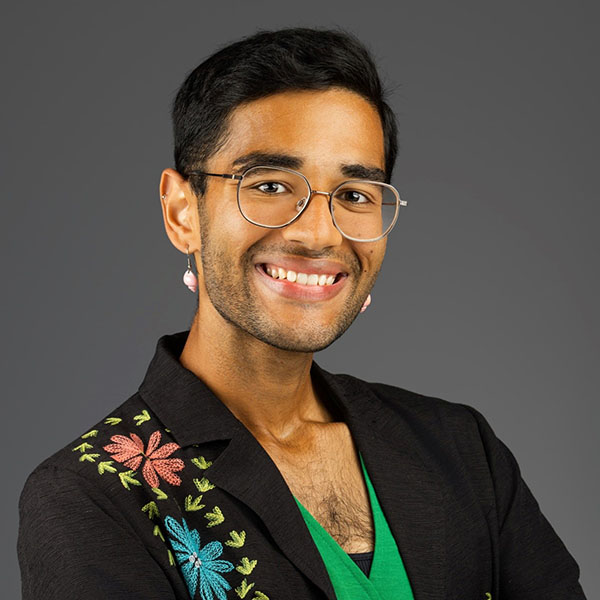
I am a second-year psychiatry resident and trained Indian classical musician. I worked with my mother, director of Laasya School of Dance, Sridevi Jagannath, to craft skit-based dance dramas utilizing Bharatanatyam, along with original music compositions to illustrate and create a visually and sonically stimulating space for psychoeducation. The productions were followed by a question-and-answer session between the audience and a panel of South Asian psychologists and psychiatrists to educate the primarily South Asian community on mental disorders and potential methods to approach treatment and improve awareness. The overall outcomes of the productions and panels were positive, with audience members feeling represented through the cultural and artistic portrayal of various mental health symptoms. The consensus and feedback surrounded audience appreciation of how mental health awareness, a strongly stigmatized conversation in the South Asian community, was addressed with care and precision and could be a tool for advocacy and attempting to deconstruct intergenerational trauma.
References
- Ganesh V, Chen T, Budhiraja A, Horowitz B, Sauer C, Victorson D. A qualitative interview study to illuminate the lived emotional, physical, and spiritual impacts of experienced Bharatanatyam dancers. Glob Adv Integr Med Health. 2025;14:27536130251382235. doi:10.1177/27536130251382235
- Mango JD, Lizaola E, Zhang L, Zima BT; UCLA Center for Health Services and Society; UCLA Semel Institute for Neuroscience and Human Behavior. Addressing depression stigma through the arts using a play inspired by the TV show “Friends.” Behav Ther. 2019. Accessed [insert date].
- Tao D, Gao Y, Cole A, Baker JS, Gu Y, Supriya R, Tong TK, Hu Q, Awan-Scully R. The physiological and psychological benefits of dance and its effects on children and adolescents: A systematic review. Front Physiol. 2022;13:925958. doi:10.3389/fphys.2022.925958